


 Sign in
Alterac Valley
This is revision 1, from Oct 29, 2026 04:23. See the current page.
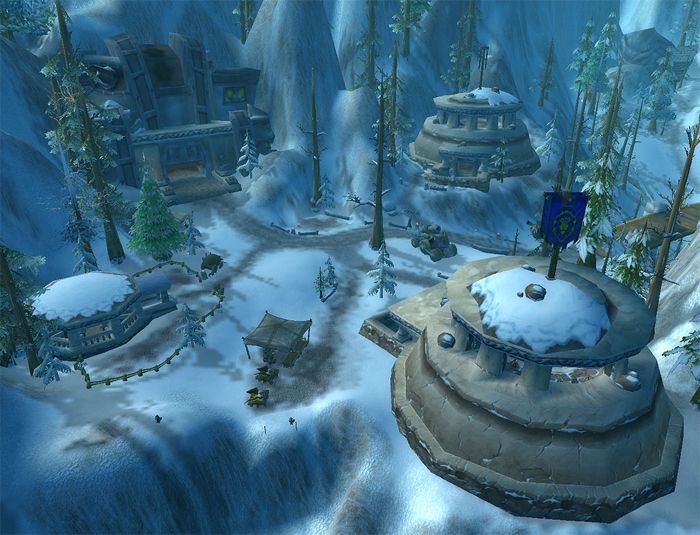
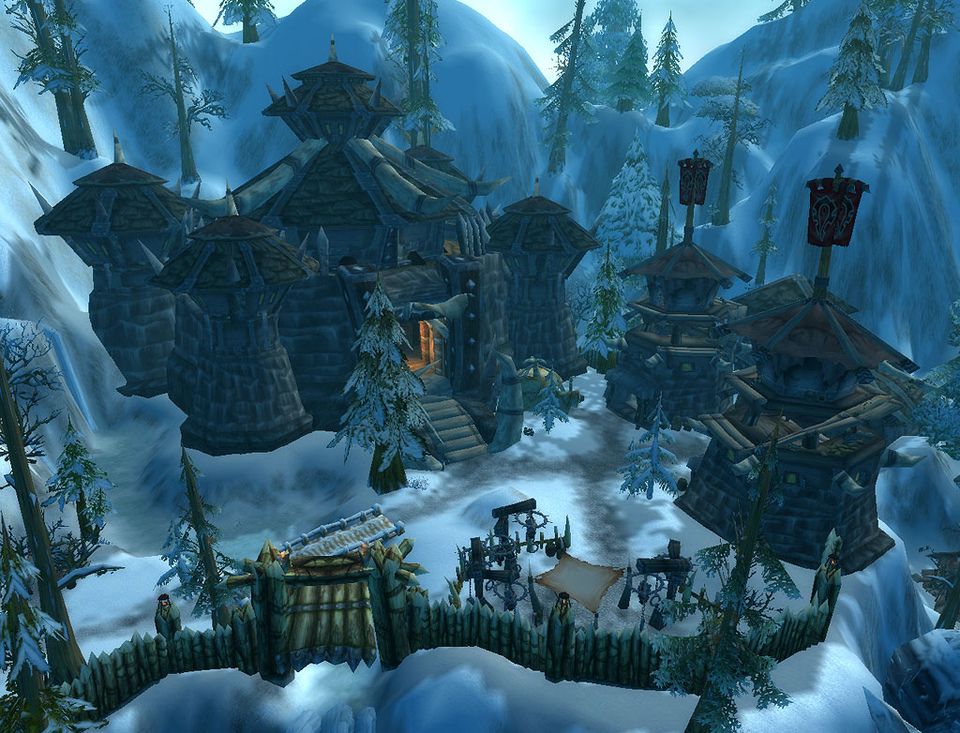
Alterac Valley is a forty-versus-forty battleground in the southern Alterac Mountains, where the dwarves of the Stormpike Guard and the orcs of the Frostwolf Clan fight for a snowy valley. It opened with patch 1.5 in June 2005 and was Blizzard's attempt at a true war zone: a huge map full of fortified towers, NPC armies, side quests and summonable elemental lords. In its early form a single match could last for hours, sometimes days, and much of the battleground's history through patch 1.12 is the story of Blizzard cutting that sprawling design down into a faster race.
Background
Before the First War, the warlock Gul'dan exiled the Frostwolf Clan, led by Durotan, for refusing to drink demon blood. After the orcs came to Azeroth, the Frostwolves settled in this hidden valley, and Durotan's son Thrall later grew up to unite the Horde. When Thrall led his people to Kalimdor, the Frostwolves stayed behind under the blind shaman Drek'Thar.
The dwarves of the Stormpike clan arrived later, digging for ore and for relics of their ancestors, and set up a base at Dun Baldar in the north of the valley. The Frostwolves saw this as an invasion. Magni Bronzebeard backs the Stormpike claim in The Sovereign Imperative, declaring the valley a holding of Ironforge, while the Frostwolves fight to keep their home. Neither side gives ground, and the valley has become a permanent battlefield.
Layout
The valley runs north to south. The Alliance holds the north and the Horde the south, with each side's defenses laid out along a single main road.
| Alliance (north) | Middle | Horde (south) |
|---|---|---|
| Dun Baldar, with Vanndar Stormpike | Snowfall Graveyard | Frostwolf Keep, with Drek'Thar |
| Dun Baldar North and South Bunkers | Field of Strife | East and West Frostwolf Towers |
| Icewing Bunker | Irondeep Mine (north) | Tower Point |
| Stonehearth Outpost, with Captain Balinda Stonehearth | Coldtooth Mine (south) | Iceblood Garrison, with Captain Galvangar |
| Stonehearth Bunker | Iceblood Tower | |
| Stormpike Aid Station and Graveyard | Frostwolf Graveyard and Relief Hut |
Each team wins by killing the enemy general. Towers and bunkers are captured by taking their banner and holding it for five minutes; once a tower falls, it burns and its archers die. Graveyards are captured the same way and move the spawn point forward. Each general is guarded by marshals or warmasters tied to the towers, so destroying towers makes the final fight easier.

The early Alterac Valley
Blizzard first designed Alterac Valley as a persistent zone rather than an instance. Quests and NPCs were added so players would have things to do when no enemies were around, and much of that design stayed when the battleground became instanced. The result was a map with far more going on than the fight between players.
NPC armies
Every tower, bunker and fortress was full of elite guards, and the generals, captains and their officers were tough bosses. Players could upgrade their side's troops by collecting armor scraps from fallen enemies and turning them in with Armor Scraps and More Armor Scraps; at each threshold, the faction's soldiers gained better gear and more health. The valley's two mines, Irondeep and Coldtooth, added more objectives: killing a mine's boss claimed it for your side, and players could then haul supplies out of it for quests such as Irondeep Supplies and Coldtooth Supplies.
Cavalry, air strikes and elemental lords
Both factions could call in heavier forces:
- Cavalry. Players tamed wild frostwolves or rams in the valley to fill their side's stables (Empty Stables, Empty Stables), and collected hides from the enemy's mounts to make riding harnesses (Ram Hide Harnesses, Ram Riding Harnesses). With both in place, the faction could send a cavalry charge into battle.
- Wing commanders. Each side had three wing commanders held prisoner in enemy territory, such as Wing Commander Ichman for the Alliance and Wing Commander Mulverick for the Horde. Freeing them let players call air strikes on enemy positions with quests like Call of Air - Guse's Fleet and Call of Air - Vipore's Fleet, fed by medals or flesh collected from enemy soldiers.
- Elemental lords. The Horde gathered Stormpike blood (A Gallon of Blood) so that Primalist Thurloga could summon Lokholar the Ice Lord, an ice elemental that marched on the Alliance bases. The Alliance gathered Frostwolf crystals (Crystal Cluster) so that Arch Druid Renferal could summon Ivus the Forest Lord, an enormous nature spirit that attacked the Horde.
The valley's other residents
The original map also held the Winterax trolls under Korrak the Bloodrager, the Syndicate under Syndicate Master Ryson in a side cave, Wildpaw gnolls, and other creatures in areas off the main road. Quests such as The Legend of Korrak sent players after them.
Players who died in the battle dropped trophy items for the other faction to collect: dwarf spines, orc teeth, human bone chips and similar parts. Racial quests such as Wanted: DWARVES! and Wanted: ORCS! turned these in for reputation.
Games that never ended
With elite NPCs everywhere, no reinforcement limit and no time limit, matches between evenly matched teams could last for hours, and on some realms a single battle stayed open for a day or more as players came and went. Many players remember these games fondly as the closest the game came to a real war. Others found them exhausting, and the cost in time is the main reason for the changes that followed.

How it changed through patch 1.12
- Patch 1.6 gave bonus honor for towers left standing and for a surviving captain, made several vendor items bind on acquire, removed the bosses' unique loot tables, lowered the reputation needed for cavalry to Honored, and let Revered players call air strikes.
- Patch 1.8 was the first large rework. Players now entered one-for-one to keep the teams even, and a battle needed only 20 players per side to start. Graveyard banners were moved apart to make graveyards harder to take, the Iceblood graveyard was fortified, and all NPCs lost 15 to 30 percent of their power. A portcullis now held each team in its tunnel for the first two minutes. An "avalanche" closed the eastern and western side areas, removing the Syndicate, the Wildpaw gnolls and most of the Winterax trolls; Korrak and his remaining trolls moved into Snowfall Graveyard.
- Patch 1.10 removed the player trophy drops and their quests. Instead, killing an enemy player gave Frostwolf or Stormpike reputation directly. Korrak and his trolls left the valley entirely.
- Patch 1.11 removed most of the NPC guards, lowered the health of those that remained, and changed the captains' buff. With the guards gone, many realms settled into what players called "the race": both teams ran past each other, rushed the enemy base, and tried to kill the general first. Games became much shorter.
- Patch 1.12 joined realms into battlegroups, so Alterac Valley could draw players from several realms at once.
Reinforcements, which end a match when one side runs out of lives, did not arrive until patch 2.3 in The Burning Crusade.
Rewards
Alterac Valley gives honor, Alterac Valley Marks of Honor, and reputation with the Stormpike Guard or the Frostwolf Clan. The quartermasters, Thanthaldis Snowgleam for the Alliance and Jekyll Flandring for the Horde, sell blue and epic gear that unlocks as reputation rises. At Exalted, players can buy the [Stormpike Battle Charger] or the [Horn of the Frostwolf Howler], the battleground's mounts. Players also earn insignia rings, starting with [Stormpike Insignia Rank 1] and [Frostwolf Insignia Rank 1], that upgrade as reputation grows.
Getting there
Both entrances lie in the southern Alterac Mountains, just above Hillsbrad Foothills. The Alliance tunnel opens near Dun Baldar and the Horde tunnel near Frostwolf Keep. Battlemasters in the capital cities also queue players for the battleground. In Classic, players had to be level 51 or higher to enter.
Sources
Categories: Battlegrounds