


 Sign in
Bank and Bags
This is revision 1, from Oct 29, 2026 04:23. See the current page.
Bags and the bank are where a character keeps their belongings. In Classic, space is tight: a new character carries a single 16-slot backpack, bags to fill the other four slots have to be bought, crafted or found, and the bank's 24 slots fill quickly. Managing inventory space was part of the daily routine of the game, and the size of a player's bags said a lot about how long they had played.
Bags
Every character has a backpack with 16 slots that can never be removed, and four slots for bags. Each bag adds its own number of slots. A character starts with only the backpack, and the first bags usually come from a tailor, a vendor or a lucky drop.
The common bags of Classic, from small to large:
- [Linen Bag], 6 slots, the first bag most characters buy or make.
- [Traveler's Backpack] and [Mooncloth Bag], 16 slots.
- [Bottomless Bag], 18 slots, a high-level tailoring bag.
- [Onyxia Hide Backpack], 18 slots, a rare drop from Onyxia that everyone in the raid wanted.
A character with four 16-slot bags and the backpack carries 80 items, a comfortable amount by Classic standards.
Special bags
Some bags hold only one kind of item, but hold more of it:
- Hunters carry quivers or ammo pouches for arrows or bullets, which also make their ranged attacks faster, such as the [Quickdraw Quiver].
- Warlocks carry soul bags for their soul shards, up to the [[forever:item:21342]] with 28 slots.
- Herbalists can use herb bags such as the [[forever:item:22251]], and enchanters bags such as the [[forever:item:22249]].
These bags take up a normal bag slot, so a hunter with a quiver has one fewer slot for ordinary bags. The question of how many slots to give to ammo or shards was a long-running cost of playing those classes.
The bank
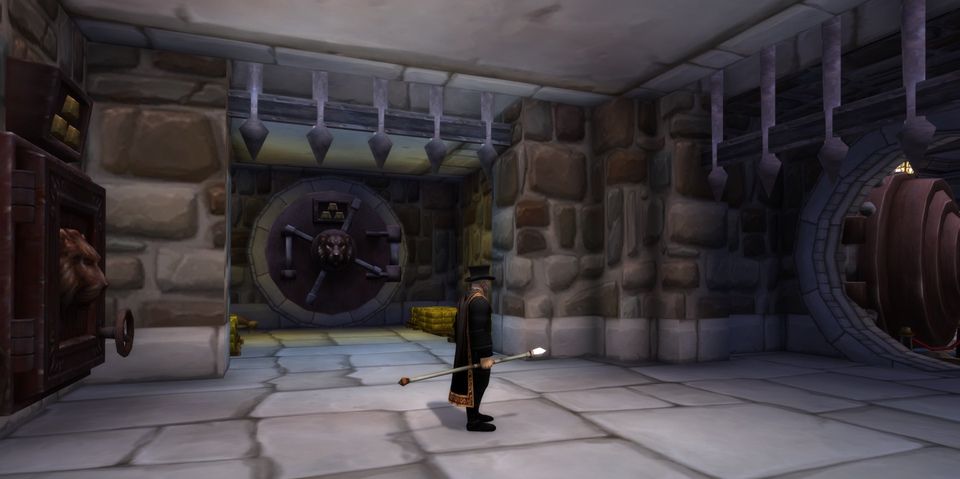
Every capital city has a bank, and some towns too. Any banker, such as Olivia Burnside or Karus, opens the same personal bank: 24 slots for items, and six more slots for bags. The first bank bag slot costs 10 silver, and each one after costs more, so filling all six was a project for a high-level character. Bags placed in the bank add their slots to it, so a bank full of large bags can store over a hundred items.
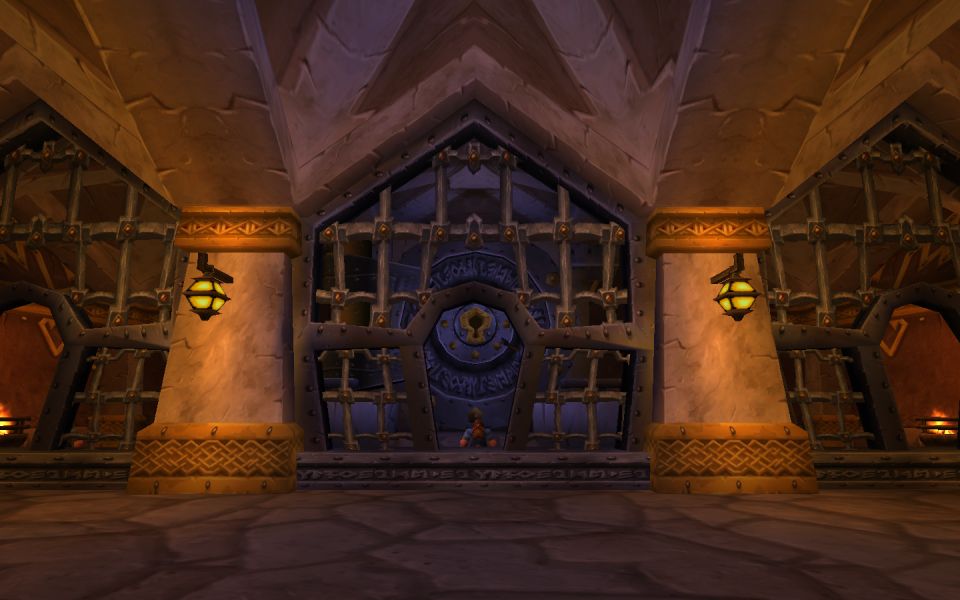

The bank is personal. Classic has no guild banks and no shared storage between a player's characters. Players got around this by making "bank alts": extra characters who stood in a city, received items by mail, and held them in their own bags and bank. Many guilds also had a character run by an officer whose job was to hold the guild's materials and items.

Making room
Players had many habits for saving space:
- Selling grey "junk" items to vendors after every outing.
- Keeping reagents, consumables and profession materials in the bank until needed.
- Using the auction house and mail to store things briefly.
- Destroying quest items for finished quests.
Inventory add-ons that combined all bags into one window were among the most popular in Classic.
Later history
The Burning Crusade added larger bags and a seventh bank bag slot. Later expansions added guild banks, a reagent bank, account-wide warband banks and a separate bag just for crafting reagents. Classic Era and WoW Forever keep the 1.12 system.
Sources
Categories: Game Mechanics