


 Sign in
Development of World of Warcraft
This is revision 1, from Oct 29, 2026 04:23. See the current page.
World of Warcraft took roughly five years to build, from a change of direction at Blizzard Entertainment in 1999 to the North American launch on November 23, 2004. In that time a studio known for real-time strategy games turned its Warcraft setting into a massively multiplayer online role-playing game (MMORPG), a game where thousands of players share one persistent world. The decisions made in those years, on quests, on the art style and on making the game approachable, shaped the version of the game that Classic and World of Warcraft: Forever are built on.
From Nomad to Warcraft
After StarCraft shipped in 1998, part of Blizzard's staff worked on a project called Nomad, a post-apocalyptic game based on the tabletop game Necromunda. According to Wikipedia's account of the game's history, Nomad struggled to find a clear direction during its first year. At the same time, many Blizzard developers had started playing EverQuest, the online role-playing game Verant Interactive released in 1999.
Blizzard's management voted to drop Nomad and make an online role-playing game set in the Warcraft universe instead. Only Nomad's project lead, Duane Stinnett, voted against. Work on Nomad stopped by the end of 1999, and work on World of Warcraft began.
The studio split its effort after StarCraft. One group built Warcraft III, and another began the online game. Some staff moved between the two; designer Rob Pardo worked on both, according to a USgamer retrospective on the game's development.
Leadership and the EverQuest influence
Allen Adham, a Blizzard co-founder, was the original lead designer and set the course for the game's early development. He left Blizzard in 2004, before launch, and Rob Pardo took over his role as lead designer.
Pardo had been a serious EverQuest player. He met Jeff Kaplan, who later became a prominent Blizzard designer, through their EverQuest guild, Legacy of Steel, which was known for world-first kills. Pardo later became Blizzard's vice president of game design and has said he drew on his time in EverQuest to guide World of Warcraft.
Announcement at ECTS 2001
Blizzard first showed World of Warcraft at the European Computer Trade Show (ECTS) in September 2001. The press kit included early screenshots of places like Westfall, with gnolls roaming the farmland.
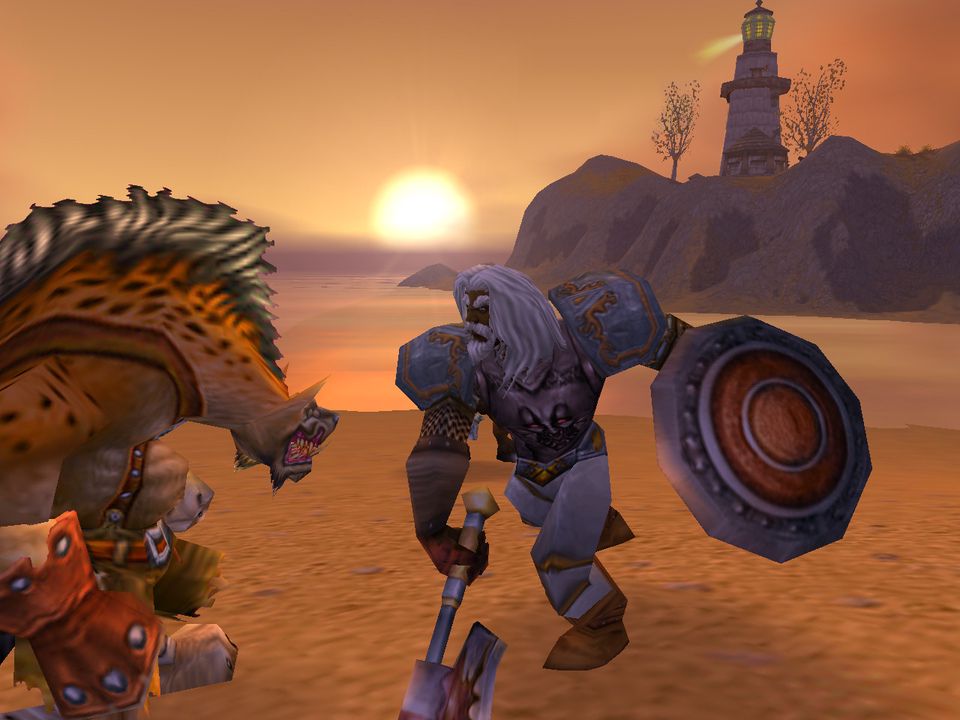

Warcraft III had been announced at the same show two years earlier, in 1999, and it shipped in July 2002. World of Warcraft would take more than three more years after its own reveal.
Design decisions
The 3D graphics engine reused parts of the proprietary technology Blizzard had built for Warcraft III. The game was also written to run natively on both Windows and Mac, and the retail box shipped on a hybrid disc that worked on either system.
A key design goal was to give players clear direction. Quests were meant to lead characters from place to place and spread them across many zones, so that crowds of players would not all hunt the same monsters in the same field. The result was a game built around quest hubs and a steady path from one zone to the next, rather than the long sessions of grinding monsters that earlier online role-playing games relied on.
Testing
Blizzard began signing up testers for a closed beta in early 2004. The closed beta ran for about seven months and served as the first phase of Blizzard's stress testing, followed by wider stress tests and an open beta in the run-up to release.
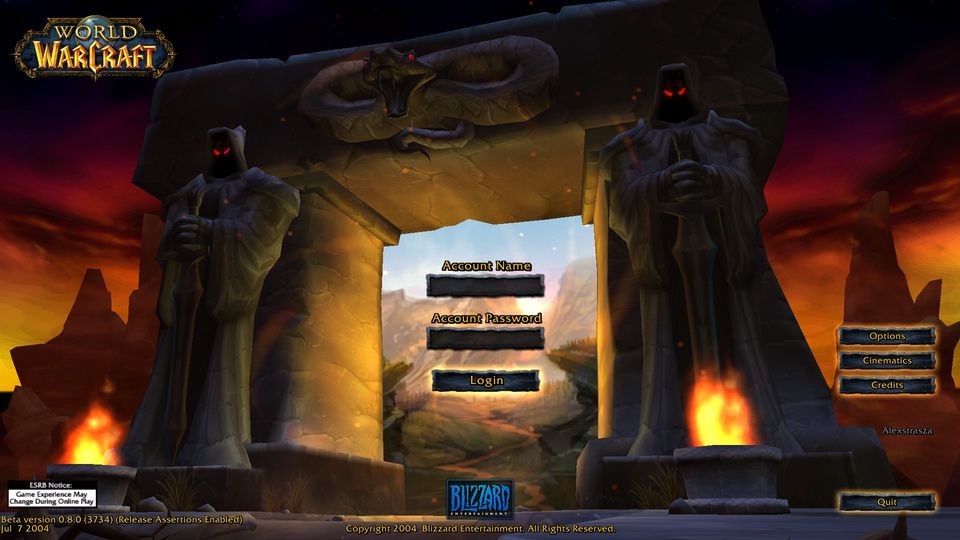

The game launched in North America and Australia on November 23, 2004. Demand overwhelmed the servers and the supply of retail boxes, a story told in Launch of World of Warcraft.
Sources
- World of Warcraft, Wikipedia (development and release sections)
- How World of Warcraft Was Made: The Definitive Inside Story, USgamer
- Allen Adham, Warcraft Wiki
- Rob Pardo, Wikipedia
- Alpha and beta, Warcraft Wiki
- ECTS 2001 Press Kit, Warcraft Wiki
Categories: Game History