


 Sign in
Honor System
This is revision 1, from Oct 29, 2026 04:23. See the current page.
The Honor System was World of Warcraft's original player-versus-player (PvP) ranking system, added in patch 1.4 on April 19, 2005. Players earned honor by killing members of the opposing faction, and once a week every realm's players were ranked against each other. The 14 ranks came with military titles such as Knight-Captain and Blood Guard and with gear, mounts and weapons that could only be bought at the matching rank. Reaching the top rank took months of near-constant play and became one of the most notorious grinds in the game.
How it worked
Honorable kills. Killing a player of the other faction who was not too low in level (gray to you) counted as an honorable kill. Each kill was worth contribution points, and higher-ranked victims were worth more. Points from a kill were split among the players in the group. Killing the same player again within a day gave less and less honor: in Blizzard's description, 100%, then 75%, 50%, 25%, and finally nothing. Killing the opposing faction's leaders in their capital cities was worth a large amount.
Dishonorable kills. Patch 1.5 added a penalty for killing civilian NPCs of the other faction, such as trainers and vendors. A dishonorable kill took away honor and held back rank progress.
Weekly standing. Ranks did not come from a fixed amount of honor. Every week, during server maintenance, each player's honor was compared with everyone else's on the same realm and faction. That standing earned rating points, the rating decayed by about 20% each week, and the result set your rank. A player needed a minimum number of honorable kills in the week to be counted at all (25 by the patch 1.5 notes). Because of decay, a player who stopped playing slowly dropped back down the ranks, and lost the title along with them.
Battlegrounds. Patch 1.5 (June 7, 2005) added the first battlegrounds, Warsong Gulch and Alterac Valley, with Arathi Basin following later. Battleground objectives were worth far more honor than fighting in the open world, so most serious rank climbing moved into battlegrounds.


Ranks and titles
| Rank | Alliance title | Horde title | Rating points |
|---|---|---|---|
| 1 | Private | Scout | 15 honorable kills |
| 2 | Corporal | Grunt | 2,000 |
| 3 | Sergeant | Sergeant | 5,000 |
| 4 | Master Sergeant | Senior Sergeant | 10,000 |
| 5 | Sergeant Major | First Sergeant | 15,000 |
| 6 | Knight | Stone Guard | 20,000 |
| 7 | Knight-Lieutenant | Blood Guard | 25,000 |
| 8 | Knight-Captain | Legionnaire | 30,000 |
| 9 | Knight-Champion | Centurion | 35,000 |
| 10 | Lieutenant Commander | Champion | 40,000 |
| 11 | Commander | Lieutenant General | 45,000 |
| 12 | Marshal | General | 50,000 |
| 13 | Field Marshal | Warlord | 55,000 |
| 14 | Grand Marshal | High Warlord | 60,000 |
Blizzard estimated that about 1.4% of a realm's characters would reach rank 11, and about 0.1% rank 14.
Rewards
Each rank unlocked items from the faction's PvP quartermasters. Once you had reached a rank, you kept the right to use its gear even if your rank later decayed.
- Rank 1: a tabard, the [Private's Tabard] or [Scout's Tabard].
- Rank 2: the class-specific PvP trinket, [Insignia of the Alliance] or [Insignia of the Horde], which removes certain crowd-control effects on a five-minute cooldown.
- Rank 3: a cloak such as [Sergeant's Cloak], and a 10% discount from your faction's vendors.
- Rank 6: entry to the officers' barracks in your capital, an officer's tabard ([Knight's Colors] or [Stone Guard's Herald]) and officer potions.
- Ranks 7 to 10: superior (blue) armor sets, such as [Knight-Lieutenant's Plate Gauntlets], and at rank 9 a battle standard ([Alliance Battle Standard] or [Horde Battle Standard]).
- Rank 11: an epic war mount, such as [Black War Steed Bridle], [Black War Ram], [Horn of the Black War Wolf] or [Black War Kodo], and access to the World Defense chat channel.
- Rank 12: epic gloves, legs and boots, such as [Marshal's Plate Gauntlets] or [General's Plate Gauntlets].
- Rank 13: the rest of the epic set, such as [Field Marshal's Plate Armor] or [Warlord's Plate Armor].
- Rank 14: epic weapons and shields, including the [Grand Marshal's Longsword], [High Warlord's Blade] and [Grand Marshal's Aegis].
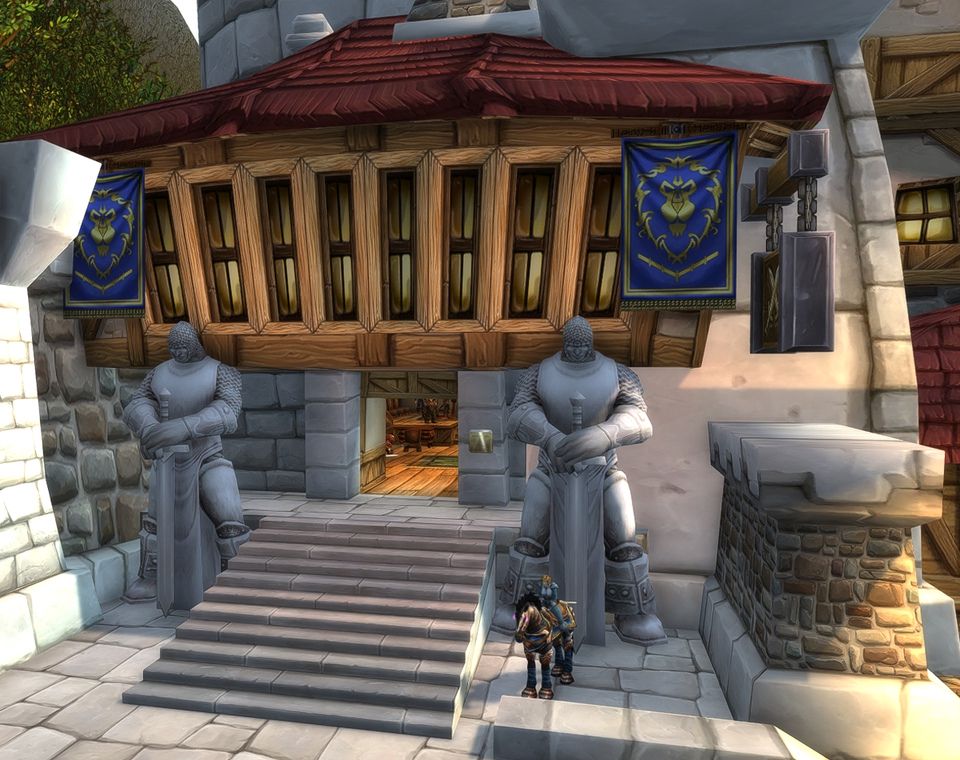

The grind
Because rank depended on doing better than everyone else on the realm, week after week, the top ranks rewarded sheer time played. A week off could undo weeks of progress, since rating decayed whenever a player fell behind. Warcraft Tavern estimates that even the most efficient players need about three months of sustained play to reach rank 14 in Classic. Blizzard later raised the share of players who could reach ranks 6 to 14 in patch 1.8.
Later history
Patch 2.0.1, released December 5, 2006 ahead of The Burning Crusade, replaced the ranking system with a new honor system in which honor became a currency spent directly on rewards.
The original system returned in World of Warcraft Classic. Phase 2, in November 2019, turned on the honor system and rank rewards, and battlegrounds followed in later phases.
Sources
- Honor system (Classic), Warcraft Wiki
- Patch 1.4.0, Warcraft Wiki
- Patch 1.5.0, Warcraft Wiki
- Patch 2.0.1, Warcraft Wiki
- WoW Classic: World Bosses and PvP Honor System Available, Blizzard Entertainment, November 2019
- WoW Classic PvP Overview, Warcraft Tavern
- WoW Classic Honor System Overview, Icy Veins
- World of Warcraft: Classic, Warcraft Wiki (content phases)
Categories: Game History