


 Sign in
Auction House
The auction house is where players buy and sell items from each other. In Classic each faction has its own market, shared among its capital cities, and a third neutral market links the goblin towns. It is the center of a realm's economy: the place to sell crafted gear and gathered materials, to find a weapon upgrade, and for some players, the game itself.
Where it is
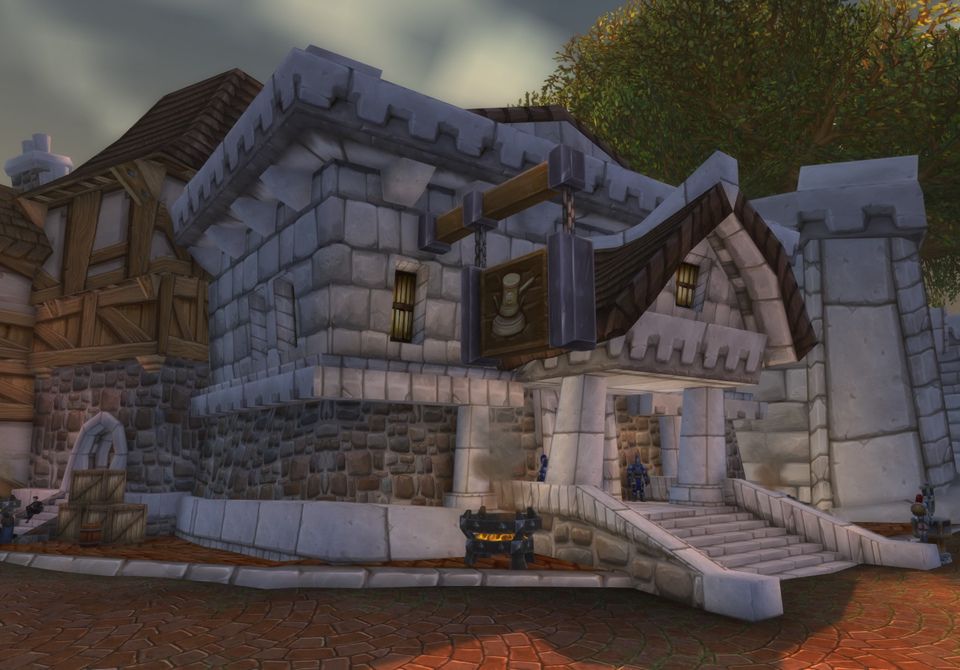
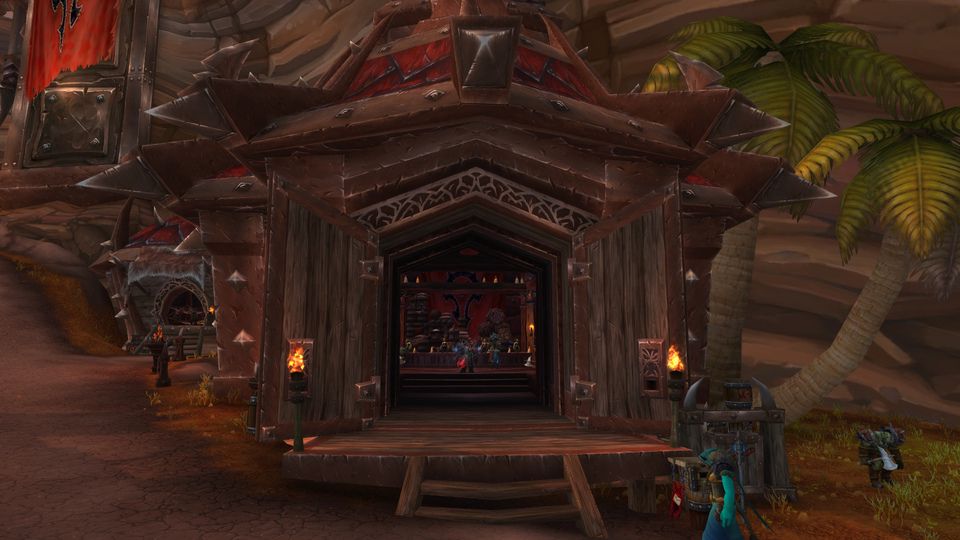
The Alliance auction house has branches in Stormwind City, Ironforge and Darnassus, all sharing the same listings. The Horde's is shared between Orgrimmar, Undercity and Thunder Bluff. Auctioneers such as Auctioneer Fitch and Auctioneer Chilton for the Alliance and Auctioneer Thathung and Auctioneer Wabang for the Horde run each branch.
The goblin towns of Booty Bay in Stranglethorn Vale, Gadgetzan in Tanaris and Everlook in Winterspring share a neutral auction house, where players of both factions can trade with each other. Ironforge's auction house was the busiest place on most Alliance realms, and players gathered there in such numbers that the city's frame rate suffered.

Selling
To sell an item, a player drags it into the auction window and sets a starting bid, an optional buyout price and a duration of 2, 8 or 24 hours. The auction house takes a deposit up front, based on the item's vendor price and the duration. If the item sells, the deposit is returned and the auction house keeps a cut of the sale: 5% at a faction auction house and 15% at the neutral one. If it does not sell, the item comes back by mail and the deposit is lost.
Money and items move by mail. When an auction ends, the winner's item and the seller's gold arrive in their mailboxes, so players kept close to a mailbox while trading. A seller can cancel an auction while it has no bids, but loses the deposit.
Buying
The browse tab searches every current auction by name, level range, item type and quality. Buyers can bid, which locks in a price until someone bids higher or the auction ends, or pay the buyout price to take the item at once. A player who is outbid gets their money back by mail.
Searching took patience in Classic. The default window shows each auction separately with no price per unit, so add-ons that scanned the whole auction house and recorded prices, such as Auctioneer, became essential for anyone who traded seriously.

The economy
Most of what sells well in Classic comes from gathering and crafting: herbs like [Black Lotus] for flasks, metals such as [Arcanite Bar], leather like [Devilsaur Leather] for leatherworking, and cloth like [Runecloth]. Players who could not raid often earned their epic mount by farming materials for those who could.
The neutral auction house had its own uses. Because it connects the two factions, players moved goods across faction lines through it, often with a second character of the other faction. Some players also used it to find bargains, since fewer players shopped there.
A realm's prices told its story. Prices for fire resistance materials rose as guilds prepared for Molten Core, consumables spiked before the Opening of the Gates of Ahn'Qiraj, and items that rarely dropped, such as the [Edgemaster's Handguards], could sell for more than many players earned in months.
Later history
Later expansions added a mobile auction app and, in patch 8.3, replaced the old auction interface with one that groups identical items and shows the price per unit. Classic Era and WoW Forever keep the 1.12 auction houses.
Sources
Categories: Game Mechanics
Comments (0)
No comments yet.