


 Sign in
Gurubashi Empire
This is revision 1, from Oct 29, 2026 04:23. See the current page.
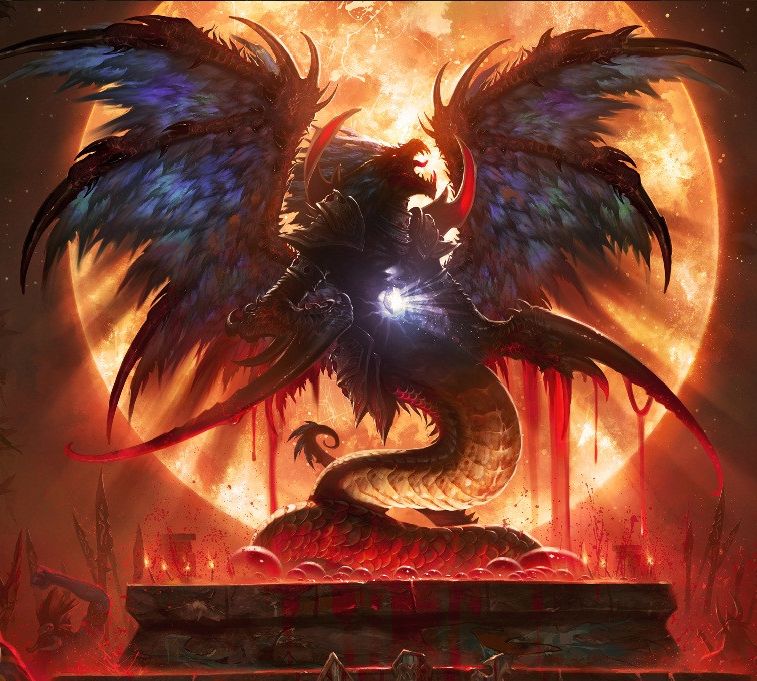
The Gurubashi Empire was the great jungle troll kingdom of the south, ruled from the temple city of Zul'Gurub in what is now Stranglethorn Vale. Its worship of the blood god Hakkar brought it to the height of its power and then tore it apart in a civil war. In Classic its ruins cover Stranglethorn, its feuding descendants fill the jungle, and its capital returns as the 20-player raid Zul'Gurub, where the Atal'ai priests have summoned Hakkar the Soulflayer once again.
History
Rise of the empire
The Gurubashi were one of the troll peoples who fought the insectoid aqir in ancient times. Guided by the Zandalari, the oldest of the troll tribes, they went south to fight the aqir around Ahn'Qiraj and took the region for themselves by wearing down their enemies with small raiding parties. The Gurubashi and the forest trolls of the Amani became the two great troll empires of their age, and both fought the night elves of the Kaldorei Empire when it expanded across Kalimdor.
When the Well of Eternity exploded during The Sundering, the Gurubashi lands were split apart. The trolls left in the western desert became the sand trolls of the Sandfury tribe, who still live in Zul'Farrak. The jungle trolls of Stranglethorn carried on the empire from Zul'Gurub.
The blood god
The years after the Sundering brought famine and war. About 1,500 years before the First War, a group of Gurubashi priests called on Hakkar, a loa (troll god) of blood, who promised them power in exchange for sacrifices. The empire's armies conquered gnolls, murlocs and rival trolls across Stranglethorn and the islands of the South Seas.
Hakkar's thirst grew until he demanded the blood of the Gurubashi themselves. When the Zandalari learned that Hakkar's most zealous followers, the Atal'ai, planned to bring the god into the world in physical form, they sailed to Stranglethorn, joined the Gurubashi who opposed Hakkar, and stormed Zul'Gurub. They defeated Hakkar's avatar and most of his priests on top of his own shrine.

Collapse
The surviving Atal'ai fled north to the Swamp of Sorrows and built the Temple of Atal'Hakkar to keep worshiping their god. When they tried to summon him again, the green dragon Aspect Ysera struck the temple and sank it into the marsh, where it lies today as the Sunken Temple.
Without its god or its priests, the empire broke apart into separate tribes. The Bloodscalp and Skullsplitter tribes stayed in Stranglethorn and spent the following centuries fighting each other. The Darkspear tribe was driven out, eventually settling on the Echo Isles, where Thrall found them and brought them into the Horde under Vol'jin's leadership.
In World of Warcraft
Stranglethorn Vale
The ruins of the empire are everywhere in Stranglethorn Vale: Ruins of Zul'Kunda, Ruins of Zul'Mamwe, Balia'mah Ruins, Mizjah Ruins and many smaller sites. The tribes that live in them are some of the most common enemies of the zone.
- The Bloodscalp tribe holds the northwest. At Grom'gol Base Camp, the Horde's camp, Nimboya wants their shrunken heads in Headhunting, and his chain ends with Bloodscalp Clan Heads, the heads of the chief Gan'zulah and the witch doctor Nezzliok the Dire. Kin'weelay collects their bone necklaces in Bloody Bone Necklaces.
- The Skullsplitter tribe holds the ruins farther south. Kebok in Booty Bay pays for Skullsplitter Tusks, and the Rebel Camp asks for their fetishes in Troll Witchery.
Gurubashi Arena
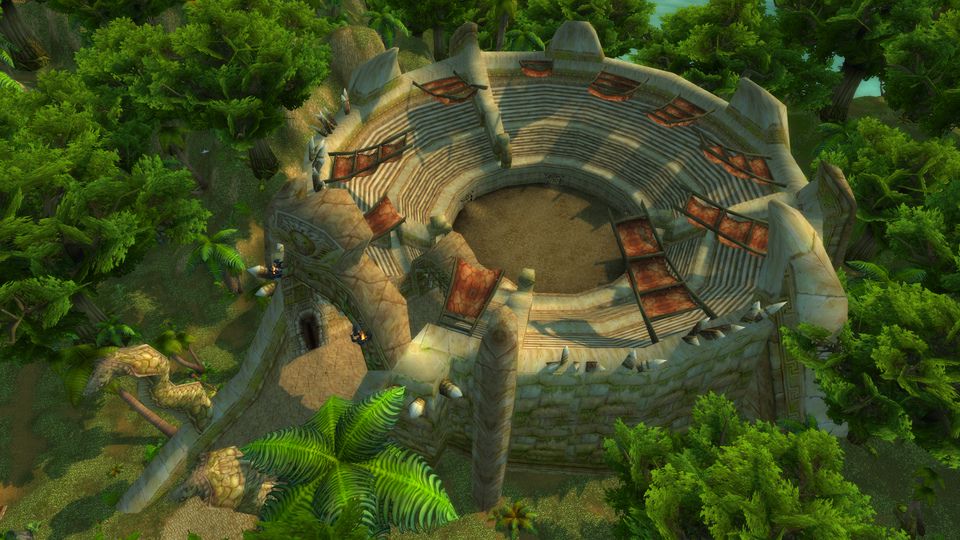
The old Gurubashi Arena (Gurubashi Arena) in the middle of the jungle is now an open-air free-for-all PvP arena. Every three hours Short John Mithril drops a chest in the center, and the player who claims it can turn it in for Arena Master, which rewards the [Arena Master] trinket.

The Sunken Temple
The Atal'ai's temple lives on as Sunken Temple in the Swamp of Sorrows, a dungeon for players around level 50. Inside, the priest Jammal'an the Prophet tries once more to summon the Avatar of Hakkar. Players who want to stop the ritual start with The God Hakkar from Yeh'kinya in Tanaris.
Zul'Gurub
Patch 1.7, "Rise of the Blood God", reopened the capital. The Atal'ai have returned to Zul'Gurub and summoned Hakkar, who has bound the high priests of the troll gods to his will. Zul'Gurub is a 20-player raid for level 60 players. Its bosses include:
| Boss | Notes |
|---|---|
| High Priestess Jeklik, High Priest Venoxis, High Priestess Mar'li, High Priest Thekal, High Priestess Arlokk | The five high priests, each tied to an animal loa |
| Bloodlord Mandokir | Rides a raptor; can drop the [Swift Razzashi Raptor] |
| Jin'do the Hexxer | Drops the [Primal Hakkari Bindings] and other primal Hakkari items |
| Gahz'ranka | Fishing boss, summoned in the lake |
| Hakkar | The blood god himself, who drops the [Heart of Hakkar] |
High Priest Thekal can drop the [Swift Zulian Tiger].
The Zandalar Tribe
The Zandalari have come back to finish what they started. Their envoys camp on Yojamba Isle off the coast of Stranglethorn, and they are the reputation faction for Zul'Gurub. Players bring them coins and bijous from the raid, such as in Gurubashi, Vilebranch, and Witherbark Coins and A Bijou for Zanza, and trade primal Hakkari items for class armor in the "Paragons of Power" quests. Turning in the Heart of Hakkar to Molthor in The Heart of Hakkar blesses everyone nearby with Spirit of Zandalar. Higher standing unlocks the Zandalari head, leg and shoulder enchantments, such as the [Zandalar Signet of Might] from Signets of the Zandalar, and Rin'wosho the Trader sells crafting recipes.
Later history
In Cataclysm, Zul'Gurub was redesigned as a five-player dungeon in which the Zandalari tried to rebuild the troll empires. The Gurubashi ruins also became part of the Zandalari invasions of Mists of Pandaria.
Sources
Categories: Lore