


 Sign in
Skinning
Skinning is the gathering profession for leather, hides and scales. A skinner takes the pelt from a beast after killing and looting it, which makes it the only gathering profession that works without leaving the questing path. Almost everything it collects goes to Leatherworking, and the rest is sold to leatherworkers on the auction house.
How it works
A skinner needs a [Skinning Knife] in their bags, sold by trade-goods vendors. Once a beast has been killed and its loot taken, the corpse can be clicked again; a short cast follows and the corpse gives up leather, a hide, a scale or a rarer item. Not every creature can be skinned: beasts, dragonkin and some other animals can, while humanoids, undead and elementals cannot. The tooltip of a skinnable corpse says so once it has been looted.
Unlike herbs and ore, which have fixed skill levels, a corpse's difficulty depends on the creature's level. In Classic a creature up to level 20 needs a skill of roughly ten times its level minus 100, and above level 20 it needs five times its level. A level 30 boar therefore needs 150 skill, and a level 60 bear needs 300. Skill gains follow the usual colors: orange always gives a point, yellow usually does, green rarely does.

Skinning has no tracking ability. A hunter's Track Beasts does the job well enough, which is one reason hunters so often take skinning.
Trainers and skill ranks
| Rank | Skill range | Character level |
|---|---|---|
| Apprentice | 1-75 | 5 |
| Journeyman | 50-150 | 10 |
| Expert | 125-225 | 20 |
| Artisan | 200-300 | 35 |
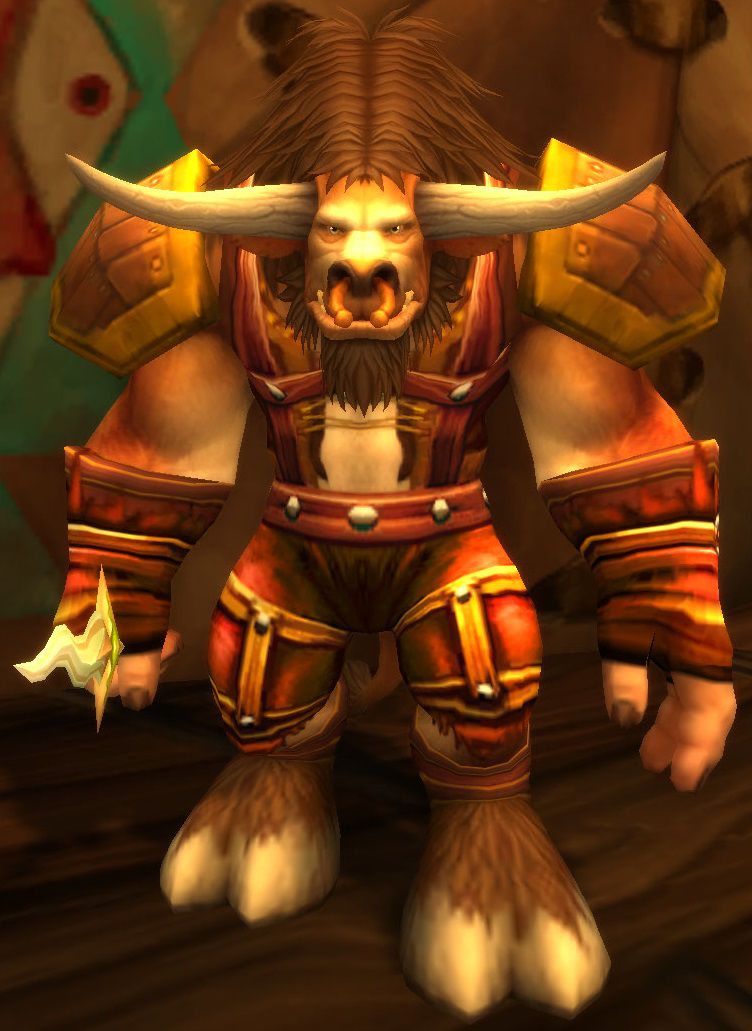
Skinning trainers stand in the starting areas and cities: Helene Peltskinner in Goldshire in Elwynn Forest, Thuwd in Orgrimmar, Balthus Stoneflayer in Ironforge and Radnaal Maneweaver in Darnassus. The Artisan rank came from trainers out in the world, such as Kulleg Stonehorn at Camp Mojache in Feralas.
Leveling route
Skinning levels naturally with a character, since the creatures a character kills while questing are usually close to its skill. The main thing to watch is keeping the skill up: a character who ignores skinning for ten levels falls behind and has to go back to lower zones.
- 1-100: wolves, boars and cats in the starting zones and the zones after them, giving [Ruined Leather Scraps], [Light Leather] and [Light Hide].
- 100-200: beasts in Wetlands, Hillsbrad Foothills, Arathi Highlands and Stranglethorn Vale, giving [Medium Leather], [Heavy Leather] and their hides, and turtles and scorpids giving [Turtle Scale] and [Scorpid Scale].
- 200-250: [Thick Leather] from beasts in Feralas, Tanaris, Azshara and the Swamp of Sorrows.
- 250-300: [Rugged Leather] from level 50 and up beasts in Un'Goro Crater, Winterspring, Felwood and the Eastern Plaguelands.

Special leathers
Some of the most valuable skins come from specific creatures:
- [Devilsaur Leather] from the devilsaurs of Un'Goro Crater, such as Devilsaur and Tyrant Devilsaur. It makes [Devilsaur Leggings] and [Devilsaur Gauntlets], a set prized by rogues and hunters, so devilsaur hunting was a popular and contested way to make gold.
- [Frostsaber Leather] from the frostsabers of Winterspring, [Warbear Leather] from bears such as Shardtooth Bear, and [Chimera Leather] from chimaeras, all used in the high-level leatherworking sets.
- Dragonscales from dragonkin: [Black Dragonscale] from black dragonkin around Blackrock Mountain, plus [Red Dragonscale], [Green Dragonscale] and [Blue Dragonscale] from their own flights' whelps and drakes.
- [Core Leather] from the Core Hounds of Molten Core, used in fire-resistance gear such as [Molten Helm].
- [Primal Bat Leather] and [Primal Tiger Leather] from the bats and tigers of Zul'Gurub, the materials for leatherworking patterns tied to the Zandalar Tribe.
- [Scale of Onyxia] from skinning Onyxia herself, the material for [Onyxia Scale Cloak], which raids needed against Nefarian's shadow flame.
[Rugged Leather] and [Rugged Hide] were the bread and butter of endgame skinning. Leatherworkers used Rugged Leather for armor kits, for [Enchanted Leather] and for much of their top gear, so it sold steadily all through Classic.
Pairing with other professions
Skinning goes with Leatherworking almost every time a player crafts leather, because a leatherworker uses huge numbers of hides and leathers while leveling. Players who just want money often pair Skinning with Mining or Herbalism: a character can skin what it kills and gather nodes while riding between quests, and there is always a buyer for leather.
Hunters were the most common skinners, since they kill beasts all day and their pets keep them safe while they work, but any class that fights animals can level it with no extra effort.
Sources
Categories: Professions
Comments (0)
No comments yet.