


 Sign in
Mining
This is revision 1, from Oct 29, 2026 04:23. See the current page.
Mining is the gathering profession for ore and stone. A miner digs metal out of veins in the hills and caves of Azeroth, smelts it into bars, and sells or uses the bars for Blacksmithing and Engineering. It also turns up the gems and elemental reagents that much of the crafting economy depends on.
How it works
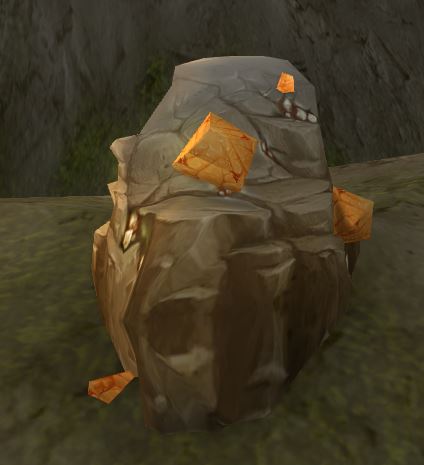
Learning Mining gives a character Find Minerals, which marks mineral veins as dots on the minimap, and Smelting, which turns ore into bars at a forge. To dig, a miner needs a [Mining Pick] in their bags; it is sold by trade-goods vendors for a few silver. Clicking a vein starts a short cast, and a vein can often be mined more than once before it is exhausted and respawns elsewhere.
Ore comes with extras. Most veins also give stone, used for sharpening stones, weightstones and engineering parts, and some give gems such as [Star Ruby] or [Azerothian Diamond]. Thorium veins give [Dense Stone], and Rich Thorium Veins have a chance at [Arcane Crystal], which alchemists need to make [Arcanite Bar].
As with every profession, an orange vein always gives skill, yellow usually does and green rarely does. Smelting gives skill too, so a miner can catch up by turning a stack of ore into bars.

Trainers and skill ranks
| Rank | Skill range | Character level |
|---|---|---|
| Apprentice | 1-75 | 5 |
| Journeyman | 50-150 | 10 |
| Expert | 125-225 | 20 |
| Artisan | 200-300 | 35 |
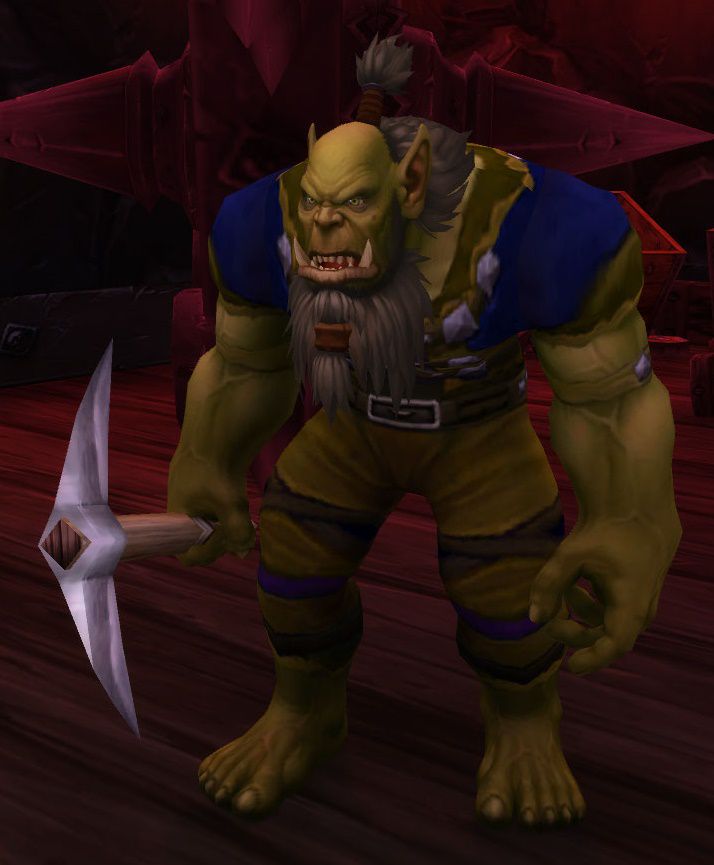
Mining trainers work in the major cities and dwarven towns: Gelman Stonehand in Stormwind City, Brock Stoneseeker in Ironforge, Makaru in Orgrimmar and Kurdram Stonehammer in Darnassus among them. City trainers teach up to Expert. Artisan Mining came from Pikkle, a goblin in Gadgetzan in Tanaris, whom miners of both factions visited once they reached 200.
New smelting recipes come with the ranks: copper, tin, bronze and silver early, iron at Journeyman, gold, steel and mithril at Expert, and truesilver and thorium at Artisan.

Leveling route
- 1-65: [Copper Ore] from Copper Veins in every starting zone and the zones after them.
- 65-125: [Tin Ore] and [Silver Ore] in Redridge Mountains, Wetlands, Hillsbrad Foothills, Stonetalon Mountains and Ashenvale.
- 125-175: [Iron Ore] and [Gold Ore] in Arathi Highlands, Desolace, Thousand Needles and Stranglethorn Vale.
- 175-245: [Mithril Ore] and [Truesilver Ore] in the Badlands, Searing Gorge, The Hinterlands and Tanaris.
- 245-300: [Thorium Ore] from Small Thorium Veins in Un'Goro Crater, Felwood, Burning Steppes and Winterspring, then Rich Thorium Veins in the same zones from 275.
Smelting fills gaps in the route. Bronze, made from one copper and one tin bar, is an easy way to gain points around 65-125, and [Steel Bar] (iron plus [Coal] bought from vendors) does the same around 165.
Dark Iron and thorium
The most unusual ore in Classic is [Dark Iron Ore]. Dark Iron Deposits appear only around Blackrock Mountain, chiefly inside Blackrock Depths and Molten Core, and need 230 skill. The ore can be smelted only at the Black Forge deep in Blackrock Depths, and it takes eight ore to make one [Dark Iron Bar]. Dark Iron bars went into fire-resistance gear such as [Fiery Plate Gauntlets] and into the [Sulfuron Hammer] that led to the legendary Sulfuras.
Thorium was the metal of the endgame. [Thorium Bar] made up most high-level blacksmithing and engineering recipes, and arcanite needs a thorium bar for every bar made, so miners farming thorium in Un'Goro and Winterspring kept the economy supplied.
Pairing with other professions
Mining's natural partners are Blacksmithing and Engineering, which both use bars at every level. A blacksmith without a miner pays for every bar; a miner without a crafting profession sells bars on the auction house, where steady demand made Mining one of the most reliable ways to earn gold. Gnomes have Engineering Specialization, a bonus to engineering, which makes Mining and Engineering a common gnome pair. Many players also take Mining with Herbalism or Skinning purely for money.
Jewelcrafting did not exist in Classic, so gems from veins went into a handful of blacksmithing, engineering and enchanting recipes and into quests rather than into a cutting profession.
Sources
Categories: Professions